Why a Systematic Ad Library Beats Random Screenshots
We can all picture that desktop: a chaotic collection of files named "Screen Shot 2026-10-26 at 11.45.15 AM." You saved that brilliant competitor ad because it sparked an idea, but now it’s lost in a sea of digital clutter. This common method of gathering inspiration is fundamentally broken. It’s reactive, disorganized, and ultimately, unactionable.
A competitor ad swipe file is the strategic alternative. It’s not just a folder of images. It’s a searchable, analyzable database that turns passive observation into active intelligence. When you save an ad to a social media platform’s native "save" feature, you risk it being deleted by the advertiser. When you use a text-only bookmark, you lose the entire visual context that made the ad compelling in the first place.
The real power of a structured library comes from its ability to reveal patterns over time. You start to see how a competitor’s messaging shifts from one quarter to the next, which offers they push for holidays, and what visual styles they are testing. This moves you beyond simply admiring a single ad to understanding the strategy behind it.
Think of this swipe file as your team’s single source of truth for competitive intelligence. It streamlines creative briefings, prevents redundant research, and gives everyone from copywriters to designers a shared reference point. It’s the foundation for building campaigns that don’t just imitate, but innovate.
Your Toolkit for Capturing Competitor Ads in the Wild

Building your library starts with knowing where to look and how to capture what you find. While platform-native tools like the Meta Ad Library and TikTok Creative Center are excellent for discovery, they are not built for long-term, personalized organization. They are search engines, not personal databases. This is where a dedicated capture process becomes essential for anyone wondering how to save competitor ads effectively.
Your first step is using a browser extension to save the ad creative and its copy directly from your feed. But don’t stop there. The most common mistake is saving the ad without investigating where it leads. You must always click through the ad to its landing page. This is a non-negotiable step because the ad is only half the story; the full conversion path reveals the complete user journey and strategic intent.
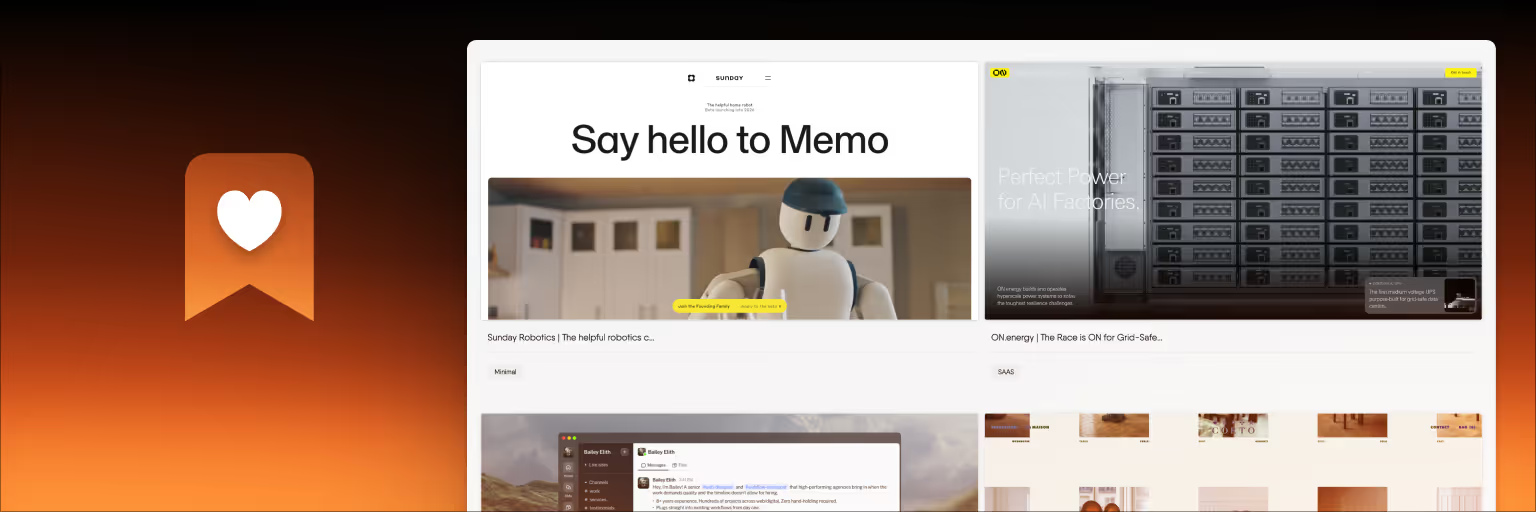
Once you land on the destination page, a visual bookmarking tool becomes your most important asset. Instead of a simple URL, it captures a thumbnail of the page, creating an immediate visual connection between the ad creative and its landing page. This visual link is what makes your library scannable and intuitive. With the right tool, you can save your first visual bookmark today and see the difference it makes. This simple two-step process—capturing the ad and its destination—is the fundamental workflow for building a truly useful swipe file.
Designing Your Organizational Framework for Quick Retrieval
A library without a system is just a prettier version of that cluttered desktop. The strategic core of your swipe file is its organizational framework. This system allows you to find exactly what you need in seconds, not minutes. We recommend a two-tiered approach to organize ad creatives for maximum efficiency.
First, establish broad categories or collections. These are your high-level folders. Think in terms of what you’d need to find during a strategy session. Actionable examples include organizing by:
- Competitor Name (e.g., Competitor A, Competitor B)
- Ad Platform (e.g., Instagram, LinkedIn, TikTok)
- Campaign Type (e.g., Product Launch, Holiday Sale, Brand Awareness)
Second, use tags for granular filtering. This is where the real power lies. Tags allow you to slice and dice your library to answer specific questions. A well-tagged collection lets you instantly find all video ads from Q4 across all competitors or isolate every ad that uses a testimonial. Consider tags like: VideoAd, UGC, StrongCTA, CarouselFormat, AnimatedGraphic, or Q4-2026.
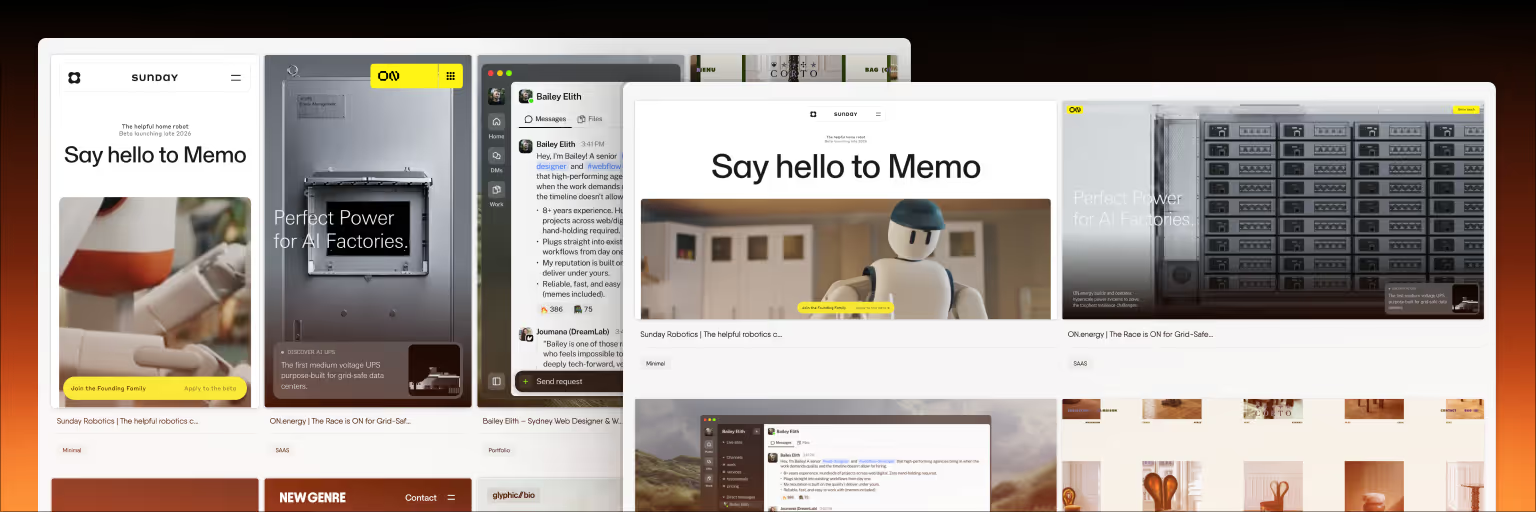
This structure is directly tied to analysis. Different view modes in a tool like Bookmarkify serve different analytical purposes. A Grid View is perfect for spotting visual trends at a glance, while a Column View helps you compare headlines and copy side-by-side. Finally, always add your own notes to each saved ad. Capture your initial hypothesis, a question, or an observation. This transforms your library from a static collection into an active intelligence tool.
| Category Type | Example Collections/Folders | Example Tags | Strategic Question It Answers |
|---|
| By Competitor | Competitor A, Competitor B | NewProduct, DiscountOffer, BrandCampaign | 'What types of offers is Competitor A running this quarter?' |
| By Ad Platform | Facebook Ads, LinkedIn Ads, TikTok Ads | VideoAd, CarouselFormat, StaticImage | 'What ad formats are most common on LinkedIn in our industry?' |
| By Funnel Stage | Top of Funnel (Awareness), Middle of Funnel (Consideration) | Educational, Testimonial, CaseStudy | 'How are competitors using testimonials to drive consideration?' |
| By Campaign Theme | Holiday 2026, Summer Sale, Evergreen | Urgency, SocialProof, BenefitDriven | 'What messaging angles did our competitors use for their holiday campaigns?' |
This table provides a practical framework for organizing a competitor ad swipe file. The structure is designed to move from broad categorization to granular tagging, enabling marketers to answer specific strategic questions quickly.
Turning Your Curated Library into Actionable Insights

An organized library is only valuable when you use it to generate action. This is where you bridge the gap between collection and creation. Start by using your new framework to answer strategic questions. For example, filter your library by "Competitor X" and the tag "Testimonial" to deconstruct their entire social proof strategy in one view. This is the advantage that systematic organization provides over random searching.
To go deeper, use a simple framework to deconstruct a single winning ad. As the American Marketing Association highlights in its guidance on how to conduct an effective competitive analysis, a structured review is key. Break it down into these five components:
- The Hook: What is the first line or visual that grabs attention?
- The Visual Composition: Why was this image or video chosen? What emotion does it evoke?
- The Core Message: What is the primary benefit or value proposition?
- The Call-to-Action (CTA): How clear and compelling is the request?
- Ad-to-Landing-Page Consistency: Does the landing page deliver on the ad’s promise?
This process becomes even more powerful when it’s collaborative. Instead of emailing screenshots back and forth, you can share your curated collections with a unique URL. This instantly aligns designers, copywriters, and strategists, ensuring everyone is working from the same playbook. Your swipe file, supported by the right ad creative analysis tools, stops being a static museum and becomes a creative laboratory for developing and validating your next A/B test hypotheses.
How to Maintain and Evolve Your Ad Swipe File
Your ad library is a living asset, not a one-off project. Its value depends on its relevance, which requires consistent maintenance. The goal is to create a dynamic resource that evolves with the market. Schedule a recurring "library audit" on your calendar, perhaps monthly or quarterly. During this time, archive old campaigns that are no longer relevant and review your tagging structure to ensure it still meets your needs.
Embrace the principle of curation over collection. A smaller, highly relevant library is far more valuable than a massive, cluttered one. Be disciplined about deleting what no longer serves a purpose. As your library matures, consider expanding its scope. Capture standout organic posts, email newsletters, and key landing pages to build a more holistic view of a competitor’s entire marketing ecosystem.
This systematic approach to content management is a discipline in itself. For broader strategies on content workflows, marketers can find valuable insights from resources like the PostingCat blog. To keep your own ideas fresh, supplement your competitor research with new stimuli. A curated source like our own Daily Inspiration feed can provide that spark. Ultimately, maintaining your swipe file is a competitive advantage that enables faster adaptation and smarter innovation.
From Inspiration to Your Next Winning Campaign
Transforming the chaotic process of saving competitor ads into a systematic workflow is a strategic imperative. A well-organized competitor ad swipe file is what turns random digital marketing inspiration into a decisive creative advantage. It equips you with the insights to build campaigns that are not only compelling but also strategically sound.
You can start today. Pick one competitor, save three of their most interesting ads and their corresponding landing pages, and add one analytical note to each. This small action is the first step toward building an invaluable strategic asset.
When you’re ready to build your creative command center, Bookmarkify is designed to support your entire workflow. Explore our free and pro options to find the plan that fits your team’s needs and start turning inspiration into your next winning campaign.